Intro
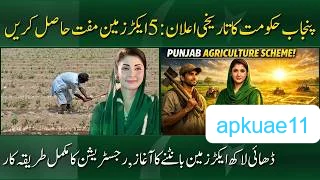
In a pivotal broadcast, a speaker explains a government policy designed to empower unemployed citizens by granting them free access to farmland. The message emphasizes accessibility, authenticity, and practical steps to participate in a nationwide initiative. The speaker frames the program as a substantial social reform, highlighting that land currently held by the state will soon become private property to foster independence, entrepreneurship, and rural livelihoods. The tone is earnest and instructional, promising clarity and actionable guidance while urging viewers to watch the full video for precise details.
Overview of Summary Contents
<center> In this summary, you will find: a clear rundown of who is eligible, what documents are required, how the process will unfold, and where to apply—both online and offline—without any associated costs. </center>
Center: Core Highlights
- Policy objective: Distribute up to 3 lakh acres of government-owned land to unemployed individuals, enabling them to cultivate, settle, and generate livelihoods without the traditional rental or lease arrangements.
- Target beneficiaries: Unemployed people and those without active businesses who want to become landholders and grow their own earnings. The policy is pitched as inclusive and transformative for households across regions with vacant public land.
- Alleviating past constraints: Previously, ordinary citizens could only farm land via leases or tenancy agreements. The new approach eliminates tenancy hurdles, granting outright possession to recipients who meet criteria.
- Significance: The plan is presented as a landmark decision expected to be widely welcomed across Pakistan, given the abundance of idle state land and the potential to boost rural economies, reduce unemployment, and diversify income streams.
Key Eligibility Requirements
The following criteria are stated as prerequisites for application. This structured list mirrors the order presented in the original message, with emphasis on verifiable documentation and personal status.
- 1) National Identity Card (CNIC): Applicants must possess a valid CNIC. If the CNIC is invalid, the applicant cannot apply.
- 2) Residential proof: Applicants must prove their place of residence. The government requests specific documents showing the local area of domicile.
- Examples include: a local land bill, a utility bill for electricity or gas, or a combination of documents. If only one document is available, it may still suffice if other acceptable proofs are provided.
- If the applicant rents or does not have direct access to home documents, an alternative proof or domicile certificate from the local authorities becomes essential.
- 3) Domicile certification: A formal domicile certificate for the applicant’s current area must be provided if not already covered by the documents above.
- 4) Marriage certificate (Nikah Nama): Married individuals or families are eligible to apply, signaling that household units may pursue the program collectively.
- 5) Home ownership status: A critical caveat is that applicants must not already own land or property. Those who own plots, houses, or other real estate would not qualify under this criterion. The policy targets landless or land-poor unemployed applicants who lack agricultural assets.
- 6) Other considerations: The speaker notes an expectation of a complete, crisis-free readiness to participate, and emphasizes that the process will be transparent and free of fees.
Document Preparation Checklist (For Applicants)
To streamline participation, the speaker urges applicants to assemble the following before the application window opens:
- Valid CNIC
- Proof of residence (land records, electricity or gas bills, or an acceptable combination)
- Domicile certificate (if required by local regulations)
- Nikah Nama (marriage certificate) for eligible families
- Clear demonstration of landless status (no current land ownership)
The speaker underscores that these documents must be accurate and verifiable, because the program’s integrity depends on rigorous eligibility checks.
- The plan is described as having two parallel portals: an offline path and an online portal. This dual-track approach helps ensure broad access, including individuals without reliable internet access.
- A crucial instruction is to avoid paying fees or third-party intermediaries; the program is explicitly described as free, with government-provided land allocations rather than paid concessions.
- The government intends to roll out a formal, dedicated platform to manage applications. The speaker confirms that a portal is being developed and will be announced publicly as soon as it is ready.
- Until the portal is operational, applicants should prepare the required documents to ensure rapid processing once the system goes live.
- Updates will be communicated through the channel hosting this summary, as well as a WhatsApp link for ongoing notifications. Subscribing to both channels is encouraged to receive timely information.
What Happens After Application
- Once the five core items are prepared, the government will guide applicants through the next steps, including land allotment and eventual settlement.
- Recipients will receive title to the land, eliminating the previous need to obtain land on lease or through rental agreements.
- Recipients will then be able to cultivate the land and use it to earn a living according to their own plans, aligning with the policy’s aim to promote self-sufficiency and economic resilience.
Outlook and Cautions
- The speaker frames the policy as a long-sought reform that could unlock opportunity for countless households.
- Viewers are reminded to monitor official channels for official announcements to avoid scams or miscommunication.
- The emphasis remains on safeguarding transparency, fairness, and zero-cost participation, with a clear warning against any paid “assistance” in the process.
- The communication ends with a call to action: watch the full video to understand precisely how to apply, prepare documents, and participate in the scheme. The organiser promises to share updates promptly and invites viewers to engage, subscribe, and stay informed.
Tables: Eligibility at a Glance
| Criterion | Requirement | Notes |
|---|---|---|
| CNIC | Valid | Invalid CNIC disqualifies applicants |
| Residential proof | Provided | Land record, electricity bill, or gas bill; one or more acceptable proofs |
| Domicile | Certificate | If not inherent in documents |
| Nikah Nama | Required | Marital status enables family eligibility |
| Land ownership | Must be none | No current land ownership; landless preferred |
| Application readiness | Prepare documents | Five items to have ready before portal opens |
Bolded Takeaways
- Free land allotment for unemployed citizens.
- Land will be owned outright, not leased.
- Eligibility relies on CNIC, residence proof, domicile, marriage status, and landless condition.
- Two-portals approach (offline and online) to maximize accessibility.
- No fees; government-driven process with official updates via channels.
Underlined Emphasis
- Transparency and integrity are core promises, with avoidance of intermediaries and charges.
- Documentation readiness is essential to smooth participation.
- Official channels will deliver the final platform and ongoing updates.
Outro
The narrated briefing closes by reiterating the potential life-changing impact of the policy for unemployed families across Pakistan. Viewers are urged to prepare the required documents, watch the full explanatory video, and await the official online and offline application portals. The presenter expresses personal intent to apply and encourages others to do the same, while consoling that the program’s success hinges on careful preparation and adherence to the stated requirements. A final blessing and farewell—“Allah hafez”—signals the cultural tone of the communication, inviting audiences to remain hopeful, proactive, and informed.