Introduction
about the Benazir Income Support Programme (BISP) and related public inquiries. The speaker greets viewers, announces major updates to installment amounts, explains the IMF-driven shifts, and outlines practical steps for beneficiaries. The message blends financial policy, humanitarian assistance, and administrative logistics, with a steady emphasis on transparency, timely payments, and user enrollment for new accounts. This summary highlights key developments, questions raised, and the suggested actions for beneficiaries, probe signals for further inquiries, and practical advice on service access.
Center: Core Developments and Practical Implications
Installment Recalibration
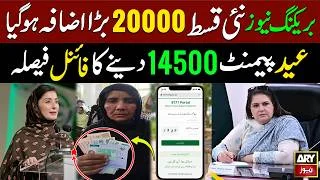
- The central news is a revised installment plan for BISP beneficiaries. The speaker notes that the previously announced installments—first 19,500, then 18,000—have been superseded by a new amount, currently described in the discourse as ₹00 in placeholder form, followed by an indication that the actual value is set to be higher than before.
- The motivation for these changes is attributed to macroeconomic pressures and IMF-related policy expectations.
- The speaker emphasizes that the government, in collaboration with international lending frameworks, is adjusting payments to reflect current inflation levels and living costs.
IMF Influence and Policy Alignment
- A substantial portion of the narration explains how IMF oversight shapes domestic social spending.
- The IMF’s condition to bolster assistance to the most vulnerable women leads to a proposal to boost installments.
- Pakistan’s government claims to have acknowledged a 24% inflation spike, and the IMF’s guidance suggests incrementing the current ₹14,500 installment by a larger margin than a simple nominal increase, bringing the total toward a new, higher installment.
- The dialogue suggests that this adjustment is not arbitrary but is a negotiated outcome designed to protect beneficiaries amid a challenging economic cycle.
Projected Payment Timelines
- The discussion covers when the new installment will begin and under what sequencing.
- There is mention that the upcoming installment might be presented as ₹20,000, with assurance from authorities about timely disbursement.
- The distinction between “before Eid” versus “after Eid” is repeatedly raised as a practical concern for cash flow and family budgeting.
- The presenter stresses that a timely release is a priority and promises forthcoming confirmation on exact dates.
Enrollment and Account Infrastructure
- The transcript highlights planned enhancements to the beneficiary account ecosystem, including the transition to a validated wallet account system.
- The narrative promises that opening a wallet account can be done from home, eliminating the need for in-person visits.
- For those with existing accounts, there is guidance on linking and reactivating accounts if required.
- The account infrastructure is framed as a path to simplifying access to installments and educational stipends.
SIM Cards and Beneficiary Verification
- A recurring topic concerns SIM cards used for identity verification and receipt of payments.
- Several scenarios are described:
- Beneficiaries who have lost their SIM cards are curious whether offices of the relevant agency or franchise channels can supply replacements.
- For those who already linked their SIMs with BISP offices, there is instruction to obtain replacements through authorized channels to avoid traveling again.
- For new beneficiaries, a visit to the BISP office is suggested to obtain a SIM for the first time.
- The transcript notes that many people report missing SIMs at the official portal and emphasizes that franchise networks or office channels can provide replacements with proper verification.
Educational Stipends for Eligible Children
- The message confirms that eligible households, including those who experience financial hardship or changes in employment status, will still receive educational stipends for their children in forthcoming installments.
- The emphasis is on continuity of educational support regardless of changes in personal circumstances, ensuring that children’s schooling is not disrupted.
Reassessment and Survey Processes
- The speaker discusses the need for ongoing verification of beneficiaries.
- A formal surveillance and verification exercise is planned, with a paused survey set to resume after June 15.
- The timeline is described as critical because re-surveys refresh eligibility data, especially for those who have fallen into noncompliance or experienced changed circumstances.
- Beneficiaries who have recently participated in surveys are advised not to repeat verification within six months unless specifically instructed.
Eligible but Previously Declared Ineligible (NAHIL)
- A notable section emphasizes that even those previously declared ineligible may still remain eligible for educational stipends.
- The presenter clarifies that women who are not primary earners can still secure support for their children’s education.
- This point reinforces an inclusive approach prioritizing children’s welfare and school continuity.
Temporary Relief Measures and Announcements
- Throughout the presentation, the host urges viewers to subscribe to the channel for ongoing updates.
- The emphasis remains on delivering timely information about new installments, account processes, and benefit disbursements.
- The content is framed as a direct source for updates concerning BISP and related welfare initiatives.
Family-Focused Messaging and Holiday Timing
- The dialogue underscores the seasonal context of Eid and summer holidays, signaling heightened attention to timely disbursement before festive occasions.
- The narrative suggests beneficiaries should prepare household budgets around expected installments or compensation timing shortly after Eid if delays occur.
Center: Summary Table of Key Points
| Topic | Details | Implications |
|---|---|---|
| Installment amount | Earlier figures of 19,500 and 18,000 replaced by a higher proposed amount, potentially around 20,000 | Increased support aligned with inflation pressures |
| IMF influence | IMF-linked policy adjustments encourage expanded assistance | Stronger welfare protections and fiscal coordination |
| Payment timing | Discussions about pre-Eid and post-Eid release schedules | Helps families plan seasonal expenses |
| Wallet account system | Transition toward home-based wallet activation | Easier and faster access to payments |
| SIM replacement | SIM updates available through authorized offices and franchises | Reduces verification delays |
| Educational stipends | Continued support for children despite changing family circumstances | Protects educational continuity |
| NAHIL beneficiaries | Previously ineligible households may still receive child education benefits | Broader inclusion of vulnerable families |
| Surveys and re-verification | Re-surveys resume after June 15 | Maintains updated beneficiary records |
| Communication updates | Strong emphasis on following official updates | Minimizes misinformation and confusion |
Important Observations
- The narrative intertwines policy mechanics with practical steps for beneficiaries, underscoring a systemic effort to strengthen social protection during inflationary conditions.
- IMF involvement is portrayed as a major influence on installment increases and broader welfare reforms.
- The communication strategy prioritizes accessibility through home-based wallet systems, franchise-supported SIM replacement, and simplified verification pathways.
- The continued emphasis on educational stipends demonstrates a child-centered welfare approach within Pakistan’s broader social protection system.
- Overall, the transcript reflects an ongoing transition toward a more transparent, digitally enabled, and beneficiary-focused welfare framework.
Outro
- The speaker closes with a reminder to stay connected for timely announcements regarding installments, account activation, verification procedures, and SIM-related updates.
- Beneficiaries are encouraged to remain proactive, maintain updated documentation, and monitor official notifications closely as IMF-aligned reforms continue.
- The final reassurance is that the overarching goal remains consistent: ensuring vulnerable women and families receive reliable financial support to manage living costs, continue education, and maintain economic stability.
- The discussion ends with customary blessings and encouragement for beneficiaries to remain informed and engaged as the welfare system evolves.