Introduction
present a broad picture of Pakistan’s evolving social protection and economic empowerment landscape in 2025–2026. Across multiple initiatives—including the Benazir Income Support Programme, Punjab entrepreneurship financing, widow support schemes, digital skills programs for women, energy-efficiency subsidies, and digital wallet reforms—the government narrative centers on three interconnected goals:
- expanding financial inclusion,
- digitizing aid delivery,
- and encouraging self-reliance through skills, entrepreneurship, and targeted subsidies.
The programs collectively emphasize transparency, digital verification, reduced intermediary involvement, and broader outreach to vulnerable households.
Core Policy Themes Emerging Across the Programs
1. Transition Toward Digital Welfare Infrastructure
One of the strongest recurring themes is the migration from manual, retailer-based systems to digitally managed platforms.
Key developments include:
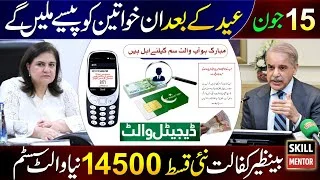
- Wallet-based BISP disbursements
- SIM-linked beneficiary verification
- Portal-based applications
- Mobile app registrations
- Home-accessible payment systems
- Electronic verification and tracking
Programs repeatedly stress:
- CNIC-linked SIM ownership
- Digital wallet activation
- OTP verification
- Online dashboards
- Electronic payment transparency
This reflects a nationwide shift toward:
- minimizing fraud,
- reducing unauthorized deductions,
- eliminating long queues,
- and improving traceability of public funds.
2. Increasing Focus on Women-Centered Assistance
Nearly every major scheme prioritizes women either directly or indirectly.
Major women-focused initiatives:
| Program | Primary Objective |
|---|---|
| Rahmat Card | Financial support for widows and orphans |
| BISP / Kafalat | Household welfare stipends |
| Hunarmand & eLearnSheEarn | Digital skills and employability |
| Nashonuma | Maternal health assistance |
| Taleemi Wazaif | Educational continuity for children through mothers |
The policy direction increasingly frames women not only as beneficiaries, but also as:
- digital users,
- household financial managers,
- entrepreneurs,
- freelancers,
- and workforce participants.
Particular emphasis appears on:
- rural women,
- widows,
- unemployed women,
- and women aged 18–40.
3. Expansion of Conditional Social Protection
The welfare structure is becoming increasingly verification-driven.
Repeated requirements include:
- Dynamic surveys
- Attendance verification
- Active CNIC status
- FBR verification
- Electricity meter ownership checks
- Poverty declarations
- Domicile confirmation
- Clean repayment histories
Programs no longer portray aid as universally automatic. Instead, support increasingly depends on:
- updated records,
- periodic re-certification,
- and compliance with eligibility conditions.
This reflects a broader move toward targeted rather than blanket welfare distribution.
Entrepreneurship and Economic Empowerment
Punjab Easy Business Finance – Phase II
The Punjab government’s financing scheme strongly emphasizes:
- SME development,
- export growth,
- startup incubation,
- and youth entrepreneurship.
Key characteristics:
- Loans up to PKR 50 million
- Grace periods for startups
- Government-backed financing
- Online applications
- Support for Punjab-based enterprises
The initiative attempts to shift beneficiaries from welfare dependency toward:
- business ownership,
- self-employment,
- and local economic participation.
Land Allocation Initiative
The land distribution proposal extends this self-reliance model further.
Core goals:
- transfer unused state land to unemployed citizens,
- encourage agriculture,
- reduce landlessness,
- stimulate rural economies.
Unlike traditional lease systems, the proposal emphasizes outright ownership, signaling a long-term asset-building approach rather than temporary relief.
Education and Skills as Long-Term Welfare Strategy
A recurring theme is the integration of welfare with human-capital development.
Education-linked welfare:
Taleemi Wazaif
- stipends tied to school attendance,
- verification by schools,
- continuity for vulnerable children.
Skills-based empowerment:
eLearnSheEarn
and
Hunarmand Program
These programs focus on:
- freelancing,
- digital marketing,
- graphic design,
- virtual assistance,
- customer support,
- online income generation.
Additional incentives include:
- free laptops,
- internet support,
- stipends during training,
- and possible overseas employment pathways.
This reflects a strategic attempt to connect welfare recipients to:
- remote work,
- digital economies,
- and international labor markets.
Energy and Cost-of-Living Relief
Several initiatives specifically address household affordability pressures.
Fan Replacement Program
The energy-efficiency initiative combines:
- subsidy support,
- installment financing,
- and reduced electricity consumption.
Intended outcomes:
- lower electricity bills,
- reduced national energy demand,
- improved appliance efficiency.
Electricity Subsidy Integration into BISP
Electricity relief programs now appear increasingly integrated into social welfare databases rather than requiring separate registration systems.
This suggests a future unified welfare architecture where:
- household consumption,
- poverty scoring,
- and subsidy targeting
are interconnected digitally.
The Growing Role of Verification and Data Systems
A dominant administrative theme is data synchronization.
Repeated verification mechanisms include:
- NADRA records,
- dynamic surveys,
- SIM registration,
- school attendance checks,
- electricity billing databases,
- FBR status,
- land ownership verification.
The emerging model depends heavily on centralized databases and continuous revalidation.
Beneficiaries are repeatedly advised to:
- keep CNICs active,
- maintain registered SIM ownership,
- complete surveys,
- update records promptly.
Shift from Cash Relief to Integrated Welfare Ecosystems
The transcripts collectively show welfare programs evolving from isolated cash transfers into interconnected support ecosystems.
These ecosystems now combine:
- cash stipends,
- education support,
- maternal assistance,
- digital training,
- business financing,
- utility subsidies,
- and digital banking infrastructure.
This integrated model aims to:
- reduce extreme poverty,
- improve employability,
- encourage entrepreneurship,
- and formalize financial participation.
Common Administrative Warnings Across Programs
Nearly all programs repeatedly caution beneficiaries about:
Avoiding fraud
- Use official portals only
- Avoid middlemen
- Do not pay unofficial fees
Maintaining documentation
- Active CNIC
- Linked SIM
- Updated surveys
- Correct household records
Monitoring deadlines
- June 15 wallet timelines
- Survey renewal periods
- Verification windows
- Attendance requirements
These warnings suggest increasing enforcement and stricter compliance management.
Broader Social and Economic Implications
Collectively, these programs reveal several larger policy priorities:
| Policy Direction | Evidence Across Programs |
|---|---|
| Digital governance | Wallets, portals, SIM verification |
| Women’s empowerment | Skills, stipends, widow assistance |
| Conditional welfare | Surveys, attendance checks |
| Economic self-reliance | SME finance, land ownership |
| Financial inclusion | Digital wallets, banking integration |
| Energy efficiency | Fan replacement subsidies |
| Human capital development | Education and digital skills |
Conclusion
The combined transcripts portray a rapidly evolving welfare and development framework in Pakistan—particularly in Punjab—where digital systems, targeted subsidies, women-focused empowerment, and entrepreneurship are increasingly interconnected.
The broader trajectory suggests a transition:
- from manual cash disbursement
- toward digitally verified, multi-program welfare ecosystems.
At the same time, the government narrative increasingly emphasizes:
- accountability,
- verification,
- financial transparency,
- and long-term economic participation rather than short-term relief alone.
For beneficiaries, the recurring practical priorities remain clear:
- maintain updated CNIC and SIM records,
- complete all surveys and verifications,
- monitor official announcements,
- avoid unofficial intermediaries,
- and engage early with digital registration systems.